
What are the best heat pumps for 2026 and beyond? A heat pump is an ideal HVAC solution for many reasons if you live in the Treasure Valley. But finding the best can be challenging at times!
Ask ten Boise homeowners what they think about heat pumps and half will tell you a story about a neighbor who froze in one. That reputation is a decade out of date, and it’s costing people the best comfort upgrade available right now. I’ve installed and serviced these across Meridian, Nampa, and Eagle for years, and here’s the short version of my best heat pump rankings: for our climate, the winner isn’t the highest efficiency number on the sticker. It’s a cold-climate-rated inverter unit that still makes real heat at 9 degrees, our actual design temperature, without leaning on backup heat strips.
Let me show you which ones clear that bar, and two things that changed in 2026 that most articles haven’t caught up to.
What is a heat pump anyway?
A heat pump is an HVAC system that heats and cools your home by moving heat instead of creating it. In summer, it moves heat out of your house like an air conditioner. In winter, it pulls heat from the outdoor air and brings it inside, even when temperatures drop below freezing. For Treasure Valley homes, a properly sized cold-climate heat pump can provide efficient year-round comfort.
Do heat pumps even work in a Treasure Valley winter?
Yes, and this is the part that’s genuinely new. Boise’s 99% winter heating design temperature is 9 degrees, per ACCA’s Manual J tables (more on this later), meaning it’s colder than that only about 1% of the year. A modern cold-climate heat pump is built exactly for that. The good ones hold 100% of their rated heating capacity down to 5 degrees and keep producing useful heat well below zero, some rated to operate at minus 13 or, on the newest units, minus 22.
Most national “best of” lists rank on SEER2, which is the cooling number. For a place that spends far more of the year heating than cooling, ranking on the cooling score gets the priorities exactly reversed. The figure that should drive your decision is HSPF2, the seasonal heating efficiency score, and even that plays second fiddle to one question: how much heating capacity does the unit keep when the temperature drops? A heat pump that taps out at 20 degrees is an air conditioner wearing a winter coat. Undersized units that aren’t cold-climate-rated, short-cycle, and shove the whole load onto resistance heat strips come January, and that January power bill is what convinces people that heat pumps don’t work. Specify and size it correctly, and you never see that bill.
One number worth understanding: COP, or coefficient of performance. A resistance heat strip has a COP of 1, meaning one unit of electricity makes one unit of heat. A good cold-climate heat pump holds a COP around 2.2 even at 5 degrees, so it’s still delivering more than double the heat per dollar of electricity when it’s genuinely cold. Close that efficiency gap, and the case for a heat pump makes itself.
Which cold-climate heat pumps are worth buying?
I’ve sorted these by the type of home each one suits, since the right answer for a ducted 2,200-square-foot house differs completely from what a detached shop or a bedroom addition needs. The specs come straight from the manufacturers. My rankings weigh field reliability, how quickly I can get parts here in the Treasure Valley, and how each unit behaves when the mercury actually drops, not a controlled lab result.
One disclosure: these are a working installer’s picks drawn from published specs and years on the job, not independent bench testing.
| Rank | Model / line | Type | Cold-climate rating | HSPF2 | Warranty (compressor) | Best for |
|---|---|---|---|---|---|---|
| 1 | Mitsubishi Hyper-Heating (H2i / FX) | Ductless or ducted inverter | 100% capacity at 5°F, operates to -13°F (FX to -22°F) | up to ~12.5 to 13.5 | 12 yr | Most Treasure Valley homes wanting best cold performance |
| 2 | Bosch IDS 2.0 | Ducted inverter | Strong low-temperature retention | ~9.5 to 10 | 10 yr | Value pick, whole-home ducted retrofit |
| 3 | Carrier Infinity / Bryant Evolution (cold climate) | Ducted variable-speed | 100% capacity to 5°F (DOE Challenge units) | up to ~12.5 | 10 yr | Ducted homes wanting high efficiency plus dealer network |
| 4 | Trane / American Standard variable-speed | Ducted | Operates to -13°F | ~9.2 to 10 | 10 yr | Durability and strong local service |
| 5 | Fujitsu Airstage / Orion (XLTH) | Ductless inverter | Cold-climate rated | up to ~14 (highest verified) | 10 yr | Additions, shops, highest heating efficiency |
1. Trane / American Standard: built to grind
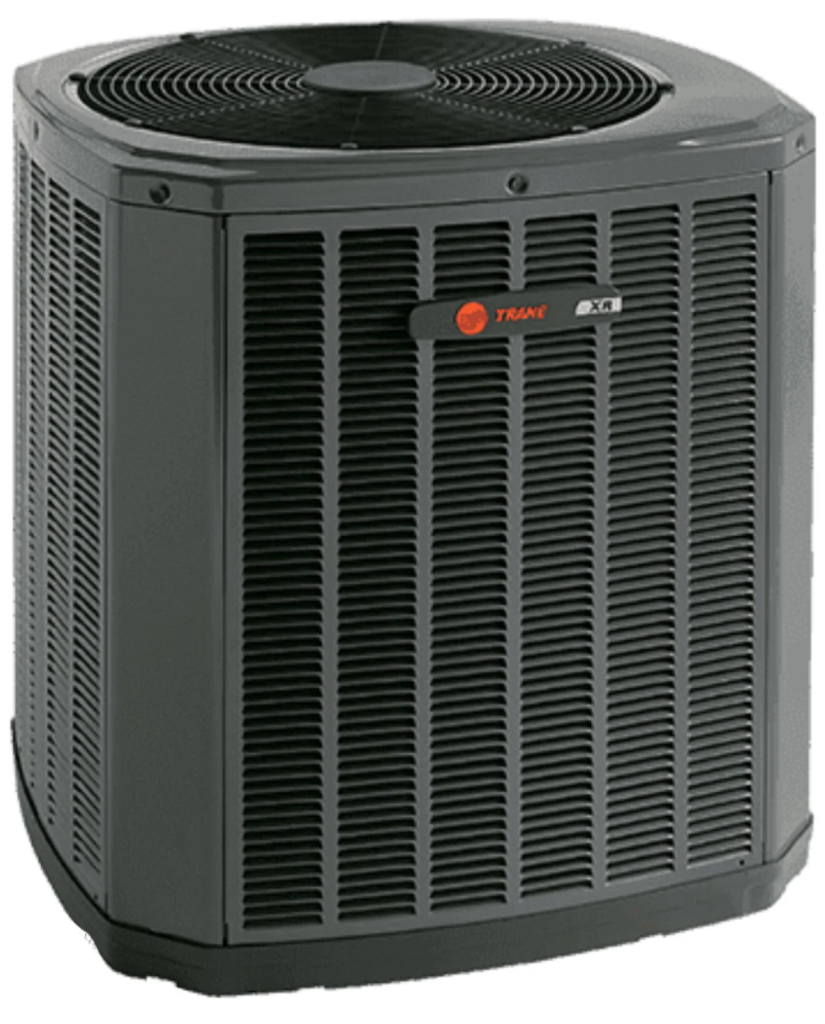
Trane (and its mechanical twin American Standard) earns its spot on durability. These variable-speed units operate down to minus 13 and are known for taking a beating over a long service life, though their published HSPF2 tends to run a touch behind the efficiency leaders. If your priority is a unit that runs hard for fifteen-plus years with strong local service behind it, this one rewards that priority.
2. Bosch IDS 2.0: the value play
If you want strong cold-climate performance without the Mitsubishi price tag, the Bosch IDS 2.0 is the pick I point budget-minded clients toward. It’s a ducted inverter unit that retains capacity well in the cold and typically installs for less than the premium brands. You give up a couple of years of warranty coverage (10 versus Mitsubishi’s 12) and a bit of low-temperature headroom. For a straightforward whole-home ducted retrofit in Meridian or Boise, it’s a lot of performance per dollar.
3. Carrier Infinity / Bryant Evolution: efficiency plus a deep dealer bench
Carrier and its sister brand Bryant fielded some of the strongest entries in the Department of Energy’s Cold Climate Heat Pump Challenge, variable-speed units engineered to hold full capacity down to 5 degrees with high HSPF2 numbers. If your home is ducted and you want top efficiency with a wide local service network behind it, these belong on your shortlist. Parts and dealer support are easy to find in the Treasure Valley, which matters more than people think when something needs a part on a cold weekend.
4. Mitsubishi Hyper-Heating: trustworthy and durable:
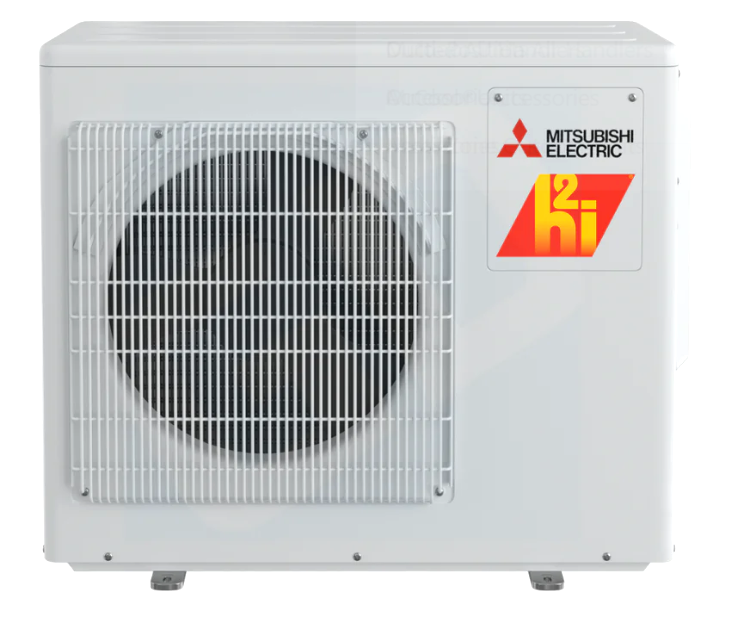
For most Treasure Valley homes that want a heat pump to carry them through winter, the Mitsubishi is a great product. The Hyper-Heating (H2i) line maintains full heating capacity down to about 5 degrees and keeps working down to minus 13, while the newest FX series pushes that to minus 22 and switches to the low-GWP R-454B refrigerant (more on that below). It comes in both ductless mini-split and ducted forms, so it fits a house with ductwork or a room addition without one. The 12-year compressor warranty is the longest of this group, and manufacturers don’t extend that lightly. You pay for it, no argument there. In a climate where the heat has to actually show up in January, though, it’s the one I’d put in my own house.
5. Fujitsu Airstage / Orion: the efficiency champ for additions and shops
For a garage, a shop, or a room addition, a Fujitsu ductless mini-split is hard to beat, and the newest Orion line posts the highest verified heating efficiency of any mini-split I’ve seen, an HSPF2 around 14. Ductless is the right tool when you’re conditioning a space that doesn’t have ductwork, and you don’t want to build any. For heating one zone efficiently, this is the pick.
Ducted vs ductless: which heat pump setup is right?
The choice usually comes down to whether you already have ductwork and how many zones you want to control. Here’s the plain-language version.
| Factor | Ducted heat pump | Ductless mini-split |
|---|---|---|
| Best fit | Homes with existing, decent ductwork | Additions, shops, no-duct homes, zoning |
| Comfort | Whole-home even temperature | Room-by-room control |
| Install cost | Uses existing ducts if sound | Higher per zone, no ductwork needed |
| Typical installed range | $5,000 to $14,000 whole-home | $3,000 to $5,500 single zone |
A quick buying-guide rule I give every client: size by a Manual J load calculation, not by rule of thumb or by matching the old furnace’s tonnage. I’ve seen contractors oversize heat pumps by 20 to 40 percent on a guess, and an oversized inverter short-cycles, wears faster, and never settles into the steady low-and-slow operation that makes these things efficient and quiet. Oversizing is not a safety margin here. It’s a comfort and reliability problem.
What changed in 2026: the tax credit and the refrigerant
Two things happened recently that most heat pump articles still get wrong, and both affect what you should buy and when.
The federal 25C tax credit is gone.
The Energy Efficient Home Improvement Credit, which provided up to $2,000 in a tax credit for a qualifying heat pump, was terminated by the One Big Beautiful Bill Act (Public Law 119-21, signed July 4, 2025) for property placed in service after December 31, 2025. If your unit was installed in 2025, you can still claim it on that year’s return using the installation (“placed in service”) date. Installed in 2026 or later? No federal credit, regardless of when you bought the equipment. Older articles telling you to grab your 30% are simply out of date. Idaho doesn’t have a statewide heat pump tax credit, so ask your utility about current rebates instead; that’s where the remaining savings live here.
The refrigerant standard changed.
As of 2025, the industry has moved away from R-410A to lower-global-warming refrigerants such as R-454B and R-32. This matters for a practical reason: a unit built on the new refrigerant is future-proofed against tightening regulations, while deep-discounted R-410A closeout equipment may be harder to service for refrigerant down the road. The Mitsubishi FX series and Carrier’s newest Infinity units already run R-454B. If a bargain quote is suspiciously cheap, check which refrigerant it uses before you sign.
What does a heat pump cost to install in the Treasure Valley?
Here are the numbers, with the caveat that follows them. A whole-home ducted heat pump typically costs $5,000 to $14,000 installed, depending on size, brand, and ductwork needs. A single-zone ductless mini-split typically lands in the $3,000 to $5,500 range. Several things swing your price:
- Your existing ductwork. Sound ducts keep a ducted install on the lower end; leaky or undersized ducts that need sealing or resizing add labor.
- Electrical service. Some homes need a panel or circuit upgrade to feed the heat pump and its backup heat, which adds cost.
- Backup heat strategy. Pairing the heat pump with your existing gas furnace as a dual-fuel system is often the smart move here, letting the heat pump do most of the work, and the furnace cover the rare deep cold snap below its efficient range.
- Sizing and zone count. A larger home or a multi-zone ductless setup with several indoor heads costs more than a single-zone setup.
As we tell our Treasure Valley customers: “The brand on the box matters less than the load calc and the install. I’ve seen a mid-tier unit sized right outrun a premium one that was slapped in on a guess.” That’s the part no spec sheet captures.


HVAC Replacement Cost Calculator
Easily estimate the cost of a new HVAC system for your home with this awesome calculator!
Thanks, Kevin with Top Shelf Heating & Cooling will contact you soon
What type of home do you own?




Which system do you need to replace and/or repair?
If you are not sure what you need, simply choose the HVAC system that you currently have in your home.


Where is your HVAC system currently located?




Gas Furnace
Select the square footage of your home below to see the average price of a new Gas Furnace installed, including parts and labor. Prices can be lower or higher depending on other factors.
Gas Furnace & Air Conditioner Unit
Select the square footage of your home below to see the average price of a new Gas Furnace & Air Conditioning System installed, including parts and labor. Prices can be lower or higher depending on other factors, these are simply median prices for an entire HVAC system replacement.
Electric Furnace (with Heat Pump)
Select the square footage of your home below to see the average price of a new Electric Furnace installed, including parts and labor. Prices can be lower or higher depending on other factors.
Air Conditioner Unit
Select the square footage of your home below to see the average price of a new Air Conditioner & System installed, including parts and labor. Prices can be lower or higher depending on other factors.
Hybrid Heat
Select the square footage of your home below to see the average price of a new Hybrid Heat System installed, including parts and labor. Prices can be lower or higher depending on other factors.
Last Details & Extras
Do you want to learn about our air quality products? Check all that apply:
Approximate Total Costs:
The final estimated price is :
Summary
| Description | Information | Quantity | Price |
|---|---|---|---|
| Discount : | |||
| Total : | |||
Matching the best heat pump to your home
Boil these rankings down and it comes to three matches. A Mitsubishi Hyper-Heating unit is well-suited to most Treasure Valley homes thanks to its cold-weather performance. A ducted retrofit on a budget points toward the Bosch IDS 2.0. An addition or a detached shop pairs naturally with a Fujitsu ductless mini-split. Whatever brand you land on, weigh cold-climate capacity and HSPF2 ahead of the SEER2 cooling figure, require a Manual J load calculation, and give dual-fuel a serious look so the deepest cold nights stay covered.
One action matters more than the brand you pick, and it’s the one that decides whether you’re comfortable or frustrated: have a Manual J load calculation run for your specific home before any equipment is ordered. That calculation, not a logo, points to the correct unit and the correct size. Skip it and you invite cold rooms and a bloated bill. Homeowners in Meridian, Nampa, Eagle, Boise, and across the Treasure Valley can reach Top Shelf Heating & Cooling at 208-572-9016 to get proper sizing for our winters.
Find the Right Heat Pump for Your Treasure Valley Home
The best heat pump is not simply the model with the highest efficiency rating. It is the system that is correctly sized for your home, your ductwork, and Idaho’s winter temperatures. Before you invest, Top Shelf Heating & Cooling can complete a proper load calculation, review your existing system, and recommend an option that fits your comfort needs and budget.
We are locally owned and serve homeowners throughout Meridian, Boise, Nampa, Eagle, and the entire Treasure Valley. Whether you need a new heat pump, a second opinion, or urgent HVAC help, our team is available 24/7.
Frequently Asked Questions About Heat Pumps in the Treasure Valley
1. Do heat pumps work during Idaho winters?
Yes. Modern cold-climate heat pumps are designed to continue heating homes when outdoor temperatures fall well below freezing. For Treasure Valley homes, the key is choosing a system that maintains strong heating capacity near Boise’s winter design temperature and having it properly sized for the home.
2. What is the best heat pump for a Boise or Meridian home?
There is no single best model for every property. Mitsubishi Hyper-Heating systems are a strong choice for cold-weather performance, Bosch IDS systems can offer good value for ducted homes, and Fujitsu ductless systems are often a good fit for shops, additions, and individual zones. The best option depends on your home’s heating load, ductwork, budget, and comfort goals.
3. Should I choose a ducted heat pump or a ductless mini-split?
A ducted heat pump is usually best for a home with existing ductwork in good condition. A ductless mini-split may be better for garages, shops, additions, older homes without ducts, or rooms that need independent temperature control. A contractor should inspect the property before recommending either option.
4. How much does a heat pump cost in the Treasure Valley?
A whole-home ducted heat pump may cost approximately $5,000 to $14,000 installed. A single-zone ductless mini-split may cost around $3,000 to $5,500. Final pricing depends on equipment size, electrical requirements, ductwork condition, installation difficulty, and whether backup heat is included.
5. Do I need a backup furnace with a heat pump?
Not every home needs one, but a dual-fuel system can be a practical choice in the Treasure Valley. The heat pump handles most of the heating season, while the gas furnace provides backup during unusually cold conditions. The right setup depends on the home, utility costs, and the selected heat pump’s low-temperature performance.
6. What efficiency ratings should I compare?
For Idaho homeowners, HSPF2 and low-temperature heating capacity are especially important because they reflect winter performance. SEER2 measures cooling efficiency, but it should not be the only number used when comparing heat pumps for the Treasure Valley.
7. Why is a Manual J load calculation important?
A Manual J calculation determines how much heating and cooling your home actually needs. It considers factors such as square footage, insulation, windows, air leakage, orientation, and local weather. Installing a unit based only on the old system’s size can lead to short cycling, uneven temperatures, unnecessary energy use, and premature equipment wear.

 6 Best Tips for Winterizing Your HVAC System