
What size HVAC system do you need for your house?
After nearly a decade of sizing, installing, and servicing HVAC systems across Boise and Meridian, we’ve seen what happens when homeowners get this decision wrong. Bills go up. Comfort goes down. Systems wear out years ahead of schedule. The question, “How big of a central AC unit do I need?” seems like it should have a simple answer, and in a way, it does. But simple doesn’t mean shortcut.
Properly sizing an AC unit for a Treasure Valley home means accounting for your square footage, insulation, ceiling height, ductwork, and, yes, the fact that Boise regularly hits 100 degrees in July. Not sure where to start? If you’re working with something like a 1,500-square-foot home, this guide will make it very clear.
First, lets discuss how HVAC sizing by “tonnage” works! HVAC
Quick HVAC Sizing Estimate For Boise And Meridian Homes
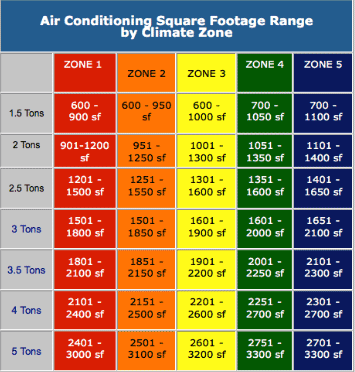
As a quick starting point, most Boise and Meridian homes fall closest to Zone 5 sizing because Treasure Valley homes need systems that can handle hot summers and cold winters. Based on that range, here is a simple estimate:
| Home Size | Estimated HVAC Size |
|---|---|
| 700 to 1,100 sq ft | 1.5 tons |
| 1,101 to 1,400 sq ft | 2 tons |
| 1,401 to 1,650 sq ft | 2.5 tons |
| 1,651 to 2,100 sq ft | 3 tons |
| 2,101 to 2,300 sq ft | 3.5 tons |
| 2,301 to 2,700 sq ft | 4 tons |
| 2,701 to 3,300 sq ft | 5 tons |
This table is a helpful starting point, but it should not be used as the final answer. A 1,500-square-foot home in Boise may need a different system than a 1,500-square-foot home in Meridian depending on insulation, windows, ceiling height, ductwork, sun exposure, and the age of the home.
That is why Top Shelf Heating & Cooling does not guess based on square footage alone. We use your home’s actual layout and condition to recommend the right system size, so you get reliable comfort without overpaying for equipment you do not need.
What Does “Tonnage” Actually Mean?
If someone quotes you a “three-ton system” and you nod along while quietly wondering what that means, you’re not alone. Most homeowners have never had to think about tonnage until the day their AC dies, and suddenly they’re making a big decision fast. Here’s what it actually means: tonnage measures how much heat your system can remove from your home per hour.
One ton equals 12,000 BTUs per hour. It has nothing to do with how heavy the equipment is. The name actually comes from an old measurement tied to melting ice, but that’s a trivia answer, not something you need for buying the right system.
BTUs vs. Tons: What’s the Difference?
The short answer: BTUs measure heating, tons measure cooling. Your furnace is rated in BTUs because it’s producing heat. Your AC is rated in tons because it’s removing it. A heat pump does both, which is part of why sizing one correctly takes a little more thought. For Boise and Meridian homeowners running both a furnace and a central AC, you’ll be looking at two separate ratings. Both matter, and both need to match your home.
Why Boise and Meridian Homes Have Unique Sizing Needs
Sizing an AC unit in the Treasure Valley isn’t the same as sizing one in Seattle, Phoenix, or Denver. Boise sits in climate zone 5B, which means the system you install needs to handle extreme conditions at both ends.
Average July highs hover around 90 degrees, with stretches that push past 105. January lows can drop to single digits. That’s a wide range for one system to cover, and it’s exactly why a sizing formula built for a milder market won’t give you the right answer here. When homeowners ask how many tons of AC they need, the honest answer starts with the climate, not just the square footage.
Older Boise Homes vs. New Meridian Construction
The age and build quality of your home shift the sizing conversation significantly. Older Boise homes often carry builder-grade ductwork, thinner insulation, and single-pane windows that let heat in faster than a newer build would. An air conditioner for a 1,500-square-foot older Boise home may need more capacity than one installed in a tighter, better-insulated 1,500-square-foot home in a newer Meridian neighborhood.
New Meridian construction tends to be better sealed, but the floor plans are often larger, which creates its own sizing demands. Neither home type fits neatly into a shortcut formula, and that’s the whole point.
The Simple Rule of Thumb (And Why It’s Not Enough)
If you are wondering “How many-ton AC unit do I need?” or “How big of a central air conditioner do I need?” These are the right questions, and the rule of thumb that answers them is worth knowing: 1 ton of cooling per 600 square feet. Quick and useful.
Here’s the breakdown:
| Home Size | Estimated Tonnage |
|---|---|
| 1,000 sq ft | 1.5 to 2 tons |
| 1,500 sq ft | 2 to 2.5 tons |
| 2,000 sq ft | 3 to 3.5 tons |
| 2,500 sq ft | 3.5 to 4 tons |
| 3,000 sq ft | 4 to 5 tons |
Bookmark that table. Just don’t treat it as the final word. Square footage is one input in a calculation with several others, and the others can shift your actual system size by a full ton or more, depending on your home.
What Happens When You Only Go by Square Footage
Contractors who size a system by square footage alone are taking a shortcut with your money. Insulation, ceiling height, window exposure, and duct condition all move the number. In Boise, Nampa and Meridian, where summers hit hard and winters hit harder, a system that’s off by even half a ton creates real problems. Too small and it can’t keep up. Too big and it short-cycles, spikes your bill, and wears out ahead of schedule. The table gets you close. A proper load calculation gets you right.
What a Manual J Load Calculation Actually Does
We’ve walked into a lot of homes over the years where the previous HVAC company sized the system by eyeballing the square footage and calling it done. And we’ve seen what that produces: rooms that never get comfortable, systems that cycle on and off every few minutes, and homeowners who assume that’s just how AC works. It isn’t. Sizing an air conditioner the right way starts with a Manual J load calculation, and we run it on every home before we ever recommend a system.
Sizing an AC unit for a house the way we do it means actually looking at the home:
- Square footage and ceiling height
- Insulation in the walls, attic, and crawl space
- Window size, type, and the direction they face
- How many people are in the home day-to-day
- The condition and layout of the duct system
- Boise’s actual climate data, not a national average
Sizing an AC unit for a house without that information is a guess. It might land close. It might not. And in a Treasure Valley summer, “might not” is a rough way to find out.
Red Flags That a Contractor Skipped This Step

A few things we’d want you to watch for when getting quotes for new HVAC systems. This happens quite often in the Treasure Valley with some HVAC companies really wanting to push new systems over repairs, and profit first (read about these companies here).
- They gave you a size before seeing the home
- Square footage was the only thing they asked about
- They recommended matching the old system without inspecting it
- No one asked about your insulation, windows, or ductwork
One of those is a yellow flag. More than one and it’s time to call someone else. At Top Shelf, we don’t quote a system size until we’ve seen what we’re actually sizing for.
What happens to wrong-sized HVAC systems?
Wrong size means real problems. Not eventually, not maybe, but from the first season the system runs. There are two ways to get this wrong, and both show up on your energy bill and in your comfort before long.
The Oversized HVAC System Issues
Too big and the system short-cycles. It cools the home fast, shuts off, then kicks back on a few minutes later. That constant on-off cycle means it never runs long enough to pull humidity out of the air. Your house hits the target temperature and still feels uncomfortable. The compressor takes a beating every time it restarts. Lifespan drops. Repair calls come sooner. And the whole time, the homeowner assumes everything is fine because the thermostat reads 72.
The Undersized HVAC System Problems
Too small and the system just never wins. On a 105-degree afternoon in Boise, it runs all day, and the back bedrooms still hit 80. It runs all night on a January low, and the house still feels cold near the windows. The motor doesn’t get a break during the hardest stretches of the year, and that continuous operation wears components down well ahead of schedule. Energy bills run higher than they should. Comfort stays lower than it should. And the fix, at that point, is a replacement that should have been sized correctly from the start.
Heat Pumps vs. Furnace and AC: Does the Sizing Change?
We get this question a lot, especially as more homeowners in Boise and Meridian start looking seriously at heat pumps. The short answer is yes, sizing does change, and it’s one of the reasons we always want to have a real conversation before recommending one system over another. With a traditional setup, your furnace and your AC are sized separately for separate jobs.
A heat pump handles both, so the tonnage calculation must cover heating and cooling in a climate that demands a lot from both. In practice, that often means a larger system than a standalone AC would require. Many Treasure Valley homeowners land on a dual-fuel setup, a heat pump for most of the year paired with a gas furnace for the coldest weeks. It’s efficient, reliable, and sized to handle what Boise winters actually bring.
What to Expect When Top Shelf Sizes Your System
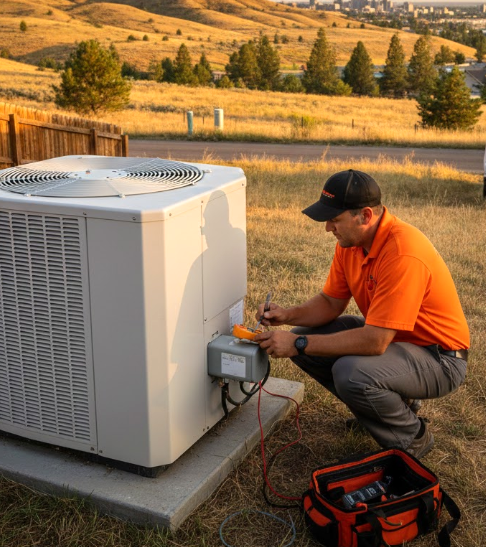
Every Top Shelf installation starts with a proper Manual J load calculation performed on-site. We evaluate square footage, ceiling height, insulation, window orientation, and duct condition before recommending any equipment. Our technicians work from actual data specific to your home and Boise’s climate zone, not assumptions or shortcuts. From there, we walk you through the findings clearly, present options that match your home’s needs and your budget, and let you make the call without pressure.
Post-installation, we handle warranty registration and follow up to confirm the system is performing correctly. With over 20 years of combined HVAC experience and a reputation built on honest recommendations, we show up to get it right the first time and stand behind the work after we leave.
So, How Many Tons Do You Actually Need?
The honest answer is: it depends on your home, and that’s not a dodge. It’s the whole point of this guide. Square footage is a starting point. Your insulation, your windows, your ductwork, and your local climate are what turn that starting point into an actual answer.
HVAC Sizing FAQ
1. How many tons of AC do I need for a 1,500-square-foot house in Boise or Meridian?
Most 1,500-square-foot homes in the Treasure Valley fall around 2.5 to 3 tons, depending on insulation, windows, ductwork, ceiling height, and sun exposure. A newer Meridian home may need less cooling capacity than an older Boise home with weaker insulation or older windows.
2. Is it better to oversize my AC just to be safe?
We get this question often, and the answer is actually no. Bigger is not always better for a new AC system. An oversized AC can short-cycle, which means it turns on and off too often. That can lead to uneven comfort, higher energy bills, more repairs, and a shorter system lifespan.
3. Can I size my HVAC system based on square footage alone?
Square footage is a helpful starting point, but it is not enough to choose the right system. A proper HVAC size should also account for insulation, window quality, duct condition, ceiling height, home layout, and Boise’s hot summer temperatures. That is why we recommend you always get a free second opinion and inspection for a new hvac system.
4. What is the best way to know what size HVAC system my home needs?
The best way is to have a professional load calculation done on your home. At Top Shelf Heating & Cooling, we look at the full picture before recommending a system, so you get the right size for your comfort, efficiency, and budget.

 HVAC Maintenance Company Nampa: How to Extend the Life of Your System