
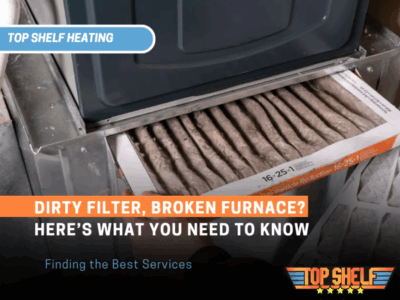
What are the top furnace failure causes?
Remember when Monica from Friends freaked out over dust? Turns out, she was onto something. A clogged air filter doesn’t just mess with your indoor air quality—it can choke your heating system, kill your cool air, and kick your allergies into overdrive. Whether it’s winter heat or summer air conditioning, your filter works harder than Ross trying to pivot a couch.
Think it’s no big deal? Keep reading—you might change your tune before that quiet hum turns into a full system meltdown.
Quick Answer: Can Your Furnace Fail Due to a Dirty Filter?
Quick Answer from Kevin at Top Shelf Heating:
Yes, your furnace can fail because of a dirty filter, and it’s more common than you’d think. When the filter is clogged with dust and debris, it restricts airflow. That lack of airflow forces your furnace to work harder, which can lead to overheating. Most modern furnaces have safety switches that shut the system down when this happens to prevent damage, but over time, repeated stress like this can cause long-term issues or even a complete failure.
Bottom line? Replacing your filter every 1–3 months is one of the simplest and most affordable ways to protect your furnace and keep it running efficiently.
What a Furnace Filter Actually Does (and Why It’s Not Just About Dust)
It’s just a filter, right? A thin sheet of mesh or cardboard you forget about until something smells weird or your furnace stops working. But that little square is doing more than you think—it’s the unsung hero keeping your air clean and your system breathing.
The furnace filter protects your unit from the inside out. It blocks dust, pet hair, and grime before they reach the blower or clog up the heat exchanger. That matters more than you’d think—because once debris builds up, airflow drops, parts overheat, and suddenly your cozy living room turns cold. Or worse, your cool air vanishes, and the unit shuts down entirely.
A clogged filter can even trigger other furnace problems like moisture buildup, leading to mold growth or damaging parts that were never meant to get wet. If your system shares ductwork with water heating, it could even spread that mold faster. Left unchecked, a neglected filter doesn’t just cost you comfort—it can lead to leaks, breakdowns, and bills you never saw coming.
What your furnace filter is really doing:
- Catches airborne junk like dust, hair, and dander before it wrecks your system
- Protects airflow so your home heats evenly without overworking the blower
- Stops clogging in the heat exchanger, helping your system avoid overheating
- Helps prevent leaks from condensation and moisture buildup around blocked vents
- Blocks mold spores and allergens from spreading through your ductwork
- Supports clean cycles for both cool air and heat, keeping energy use in check
So no, it’s not just about dust. A clean filter keeps your furnace efficient, your home healthier, and your peace of mind intact. Treat it like a vital part of your system—not a backup singer.
Yes, a Dirty Filter Can Wreck Your Furnace—Here’s How
A dirty furnace filter is like driving your car with a potato in the tailpipe. It might run for a bit, but eventually, it chokes. Filters aren’t just there to collect dust—they regulate airflow, protect internal parts, and keep your system running like it should. Ignore that buildup long enough, and the damage starts stacking up fast.
When airflow drops, your furnace has to pump harder to push warm air through. This strains the blower motor, increases wear, and can overheat the system. In some setups, restricted airflow even affects your refrigerant lines, especially in dual heating and cooling systems. That could leave you with no heat in winter and weak cool air in summer—worst of both worlds.
Then there’s the health impact. For people with asthma or breathing sensitivities, a clogged filter turns your HVAC system into a dust distributor. And if you’re using a cheap filter with a low Minimum Efficiency Reporting Value (MERV) rating, you’re barely filtering anything at all.
Here’s what that innocent-looking filter can destroy:
- Overheats the furnace: Poor airflow = hot components that trigger auto-shutoff or lead to burnout
- Damages the blower: The motor works overtime, reducing its lifespan dramatically
- Messes with refrigerant: On hybrid systems, bad airflow can freeze coils or disrupt pressure levels
- Causes uneven heating: Rooms become cold, while the furnace strains to catch up
- Worsens indoor air: Dust, dander, and allergens recirculate, flaring up asthma and allergies
- Leads to full shutdowns: Left too long, the unit locks out or fails altogether
Common Warning Signs You’ve Waited Too Long

If your furnace starts sounding like a popcorn machine or pumping out air that feels like a sigh, it’s not being dramatic—it’s warning you. And the longer you wait, the more damage creeps in. By the time your furnace stops working completely, that minor filter issue could’ve snowballed into a full-blown furnace repair nightmare.
A neglected filter doesn’t just mess with airflow. It puts stress on key components like the blower, the evaporator coil, and even your ventilation system. Dirty filters force heat to build up where it shouldn’t, and that can lead to dangerous levels of carbon monoxide inside the home. That’s not just a breakdown risk—that’s a health emergency.
You don’t need to be an HVAC tech to spot the red flags. Your furnace will start dropping clues long before it quits entirely.
Watch for these signs your filter’s long overdue:
- Weak airflow: Vents barely blowing, even with the system cranked high
- Uneven room temperatures: One room’s tropical, another feels like a walk-in freezer
- Frequent cycling: Furnace turns on and off constantly, never completing a full heating cycle
- Unusual smells: Burnt dust, musty air, or metallic scents can signal overheating or blocked ventilation
- Loud noises: Whining, banging, or rattling from the blower or motor
- Rising energy bills: Higher costs with no extra comfort means the system’s working overtime
- CO detector alerts: A real danger—dirty filters can indirectly lead to blocked exhaust paths and carbon monoxide buildup
If your furnace is giving you these signs, don’t wait for it to go silent. Call it what it is—a cry for help. Clean filters cost less than a streaming subscription and could save your system from an early retirement.
Calculate Long-Term Savings of Regular Filter Changes
Long-term savings from regular filter maintenance are substantial. Over a typical heating season, clean filters help the furnace operate at optimal efficiency, reducing energy consumption by an estimated 10%–15%. This increase in efficiency can translate into savings of $100 to $200 per season on energy bills alone.
Regular filter changes prevent wear on expensive components such as the blower motor and heat exchanger, which might otherwise require costly repairs or replacement. A comprehensive table below summarizes the comparative costs and savings associated with routine filter maintenance versus potential repair expenses stemming from neglect:
| Expense Category | DIY Filter Replacement (per season) | Potential Repair Cost (if neglected) | Estimated Energy Savings |
|---|---|---|---|
| Filter Cost | $30 | N/A | 15% energy efficiency |
| Increased Energy Bills | N/A | $150 – $300 | $100 – $200 savings |
| Repair Visit (Minor) | N/A | $150 | N/A |
| Repair Visit (Major) | N/A | $1000+ | N/A |
| Total Annual Cost Impact | ~$30 | Up to $1200 | Significant savings |
The table illustrates that a small, periodic expense on filters can prevent much larger repair bills and energy losses. For homeowners, this represents a smart investment in both reliability and fiscal responsibility.
DIY or Pro? What You Can Handle—And What You Shouldn’t

Changing a filter? That’s your job. Rewiring a thermostat or replacing a blown heat pump capacitor? Call a pro—unless you enjoy voiding warranties or learning HVAC repair the hard way.
There’s a fine line between smart homeowner maintenance and accidental system sabotage. Swapping out filters, vacuuming vents, and checking the humidifier pad? Easy wins. But once you start poking around wiring, gas lines, or anything involving electrical loads, you’re stepping into hazard territory—and one wrong move could turn a small issue into a full-scale furnace repair situation.
And if you’re dealing with indoor air quality problems like pollen buildup or recurring allergy flare-ups, it could be deeper than a dirty filter. Ducts, sensors, and system calibration are best left to trained techs with the tools (and insurance) to do it right. Here at Top Shelf Heating & Cooling we do not recommend DIY HVAC work. Cleaning your filters is one thing, but don’t try to diagnose or fix issue on your own, here is what we recommend:
What’s safe for DIY:
- Swapping out air filters every 1–3 months
- Cleaning return vents and register grilles
- Refilling or replacing humidifier water panels
- Resetting or testing the thermostat batteries
What should be left to furnace repair services:
- Diagnosing airflow issues or poor heating
- Fixing short-cycling, loud noises, or burned-out motors
- Servicing heat pumps or dual systems
- Addressing leaks, corrosion, or gas smells
- Deep-cleaning ducts to reduce pollen, mold, and dander
- Upgrading or rewiring thermostats
Quick & Clean FAQ: Furnace Filter Edition
1. How often should furnace filters be changed to prevent system failure?
Every 1–3 months. Got pets, dust, or allergies? Bump it up. Skipping changes strains the system and can wreck your compressor, switch, and airflow. Filters are cheap. Furnace repairs aren’t.
2. What else helps indoor air quality besides changing filters?
Along with regular filter changes, try adding an air purifier to trap even smaller particles. Vacuum with a HEPA filter, clean ducts every few years, and control humidity to prevent mold growth. These steps help cut down on air pollution inside your home—especially if you’ve got pets, allergies, or live near high-traffic areas.
3. Can a dirty filter really cause my furnace to overheat and shut down?
Absolutely. Blocked airflow leads to overheating. That trips the safety switch, shuts things down, and can toast your parts faster than your morning bagel.
4. Is filter maintenance really saving me money?
Yep. A $10 filter change can dodge a $1,000 furnace repair. Dirty filters spike energy use, damage parts, and cut your system’s life short—plus they mess with air conditioning and water heating combos too.
5. When should I seek professional HVAC repair services regarding my furnace?
Weird noises, rising bills, poor airflow, or nonstop cycling? That’s your cue. Don’t wait for a total breakdown. Pros can spot issues before they hit your compressor or shut your system down completely.
Furnace Failure Verdict –
If your filter looks like it’s been through a lint tornado, it’s not “seasoned”—it’s suffocating your system. Skipping filter changes is like brushing your teeth once a month and wondering why your dentist sighs. Your furnace deserves better.
At Top Shelf Heating & Cooling, we keep your system breathing easy—so you don’t end up wrapped in blankets, Googling “why won’t my furnace turn on?” From clean filter swaps to full-system tune-ups, we’ve got the tools, the tech, and the time to do it right.

 The Ultimate Homeowner’s Guide to Reliable Cooling and Comfort Tips