
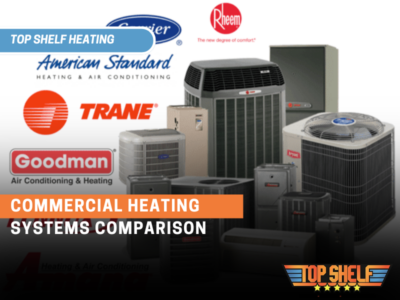
What is the best commercial heating system for your business or commercial space?
Comparing heating systems like boilers, furnaces, heat pumps, and rooftop units. Commercial heating options feel endless, and every salesperson claims their is the best. This guide cuts through the noise with clear comparisons on cost, efficiency, and maintenance so property owners can choose what fits their building, not just the pitch.
If you are a commercial business or property owner, let us help guide you with the best Commercial Heating and HVAC systems!
What Are the Best Commercial Heating Systems for Energy Efficiency?
Energy efficiency in commercial heating isn’t about chasing the highest rating on paper. It’s about how consistently a system delivers heat without wasting fuel across long operating hours. In real buildings, efficiency shows up in stable indoor temperatures, predictable utility bills, and fewer runtime spikes during cold periods.
High-efficiency systems tend to share a few traits. They modulate output instead of running full blast. They recover heat rather than dump it. And they adapt to part-load conditions, which is how most commercial buildings actually operate. Systems that can scale up and down smoothly almost always outperform oversized units that cycle on and off all day.
The most efficient setups are usually chosen based on building size, insulation quality, usage patterns, and local energy rates. When those factors are matched correctly, efficiency stops being theoretical and starts showing up on monthly statements.
What Are the Best Commercial Heating Brands?
While there are plenty of manufacturers out there, here are the best brands when it comes to commercial heating prodcuts:
- Trane: Known for durability and reliability in large commercial systems, especially rooftop units and chillers (our go to here at Top Shelf Heating & Cooling)
- Carrier: Industry leader offering a wide range of dependable commercial heating and packaged systems
- Daikin: Global manufacturer focused on high-efficiency heat pumps and VRF systems for commercial applications
- Lennox Commercial: Strong in light commercial rooftop units with a good balance of performance and cost
- York: Backed by Johnson Controls, widely used in large buildings with strong system integration and controls
- Rheem: Reliable option for light commercial heating and water heating systems
- Ruud: Similar to Rheem, known for dependable and cost-effective commercial equipment
- Bosch: Focused on high-efficiency and electrification with growing commercial heat pump solutions
- Lochinvar: Top choice for commercial boilers and water heating systems, especially in multifamily and industrial settings
- Weil McLain: Well-known for durable commercial boiler systems and hydronic heating applications
- Navien: Leader in high-efficiency tankless water heaters and combi systems for commercial use
How Do Boilers, Heat Pumps, and Furnaces Compare in Efficiency?

Boilers are efficient because they deliver steady, even heat. Hydronic systems lose less heat in distribution and work especially well in larger buildings with long operating hours. Condensing boilers push efficiency further by capturing heat that older models waste through exhaust.
Heat pumps operate on a different principle. Instead of generating heat, they move it. In moderate climates, this makes them extremely efficient, especially during shoulder seasons. Modern commercial heat pumps maintain efficiency at lower temperatures more effectively than earlier generations, but performance still depends on the climate and electrical infrastructure.
Furnaces rely on combustion efficiency. High-efficiency models perform well in smaller commercial spaces and buildings with simpler layouts. They heat quickly but tend to lose efficiency through ductwork, especially in older buildings with leaks or poor insulation.
Efficiency comparison by system type:
- Boilers excel at steady, long-duration heating
- Heat pumps lead in mild conditions and mixed-use schedules
- Furnaces perform best where fast heat and lower upfront cost matter
Which Commercial Heating Solutions Offer the Lowest Operating Costs?
Lowest operating cost doesn’t always come from the most efficient system. It comes from the best balance between energy source, maintenance demands, and runtime behavior.
Boilers often deliver low operating costs in large facilities because they operate efficiently for extended periods with minimal cycling. Their fuel use stays consistent, and maintenance intervals are predictable when systems are properly sized.
Heat pumps can offer the lowest operating costs where electricity rates are favorable, and winter temperatures stay within their efficient range. When paired with smart controls, they reduce waste during low-occupancy hours.
Furnaces usually cost more to operate over time, especially in buildings with extended hours or uneven heat demand. They’re simpler systems, but higher fuel use and duct losses can push operating costs up year after year.
In practice, operating cost is driven by:
- How often the system run
- How evenly it delivers heat
- How much energy is lost during distribution
- How frequently it need service or repair
When those factors are evaluated together, the lowest operating cost solution becomes clear. It’s rarely about the cheapest equipment. It’s about the system that wastes the least energy in your specific building.
How Do Installation Costs Vary Among Commercial Heating Systems?
Installation costs for commercial heating systems vary widely because you’re paying for infrastructure, labor intensity, and system complexity, not just the equipment. Below are realistic installed cost ranges commonly seen for commercial projects.
These figures reflect typical mid-sized commercial buildings and standard site conditions.
| Commercial Heating System | Typical Installed Cost Range | Why Costs Land Here |
|---|---|---|
| Uses existing ductwork, simpler controls, and minimal piping | $6,000 – $15,000+ | Uses existing ductwork, simpler controls, minimal piping |
| Condensing Boiler System | $15,000 – $40,000+ | Hydronic piping, pumps, venting, controls, commissioning |
| Radiant Heating System | $12,000 – $30,000+ | Electrical upgrades, refrigerant lines, controls integration |
| Radiant Heating System | $20,000 – $50,000+ | Subfloor prep, tubing, zoning, long labor timeline |
| Rooftop Packaged Units (RTUs) | $10,000 – $25,000+ | Crane lifts, curb work, duct tie-ins |
The largest cost jumps usually come from electrical capacity upgrades, distribution changes, and control systems, not the heating unit itself. Two buildings with the same square footage can end up priced far apart based on readiness and layout.
Important note: These price ranges are estimates only. Actual installation costs vary based on building size, system capacity, access conditions, energy source, permitting, and market conditions. Prices are subject to change and should always be confirmed through a professional on-site evaluation.
What Factors Influence the Cost of Commercial Heating Installation?

The cost question is the most frequently asked when it comes to new commercial HVAC and heating systems. There are several factors that contribute to the overall cost, ranging from the sheer size of your property to the type of system you select. Here are the rough factors for installation pricing and how systems are priced:
- Building readiness. Older structures may need duct repairs, electrical service upgrades, or venting changes.
- System capacity and zoning. More zones mean more controls, valves, sensors, and labor.
- Energy source availability. Gas line upgrades, or electrical capacity increases, add real cost.
- Distribution method: Ducted air, hydronic piping, or in-slab tubing each carries different labor demands.
- Controls and integration. Building management systems and smart controls increase upfront cost but improve efficiency.
- Access and scheduling. Tight mechanical rooms, rooftop work, or after-hours installs raise labor time.
- Permits and commissioning. Proper testing, balancing, and inspections protect performance but add line items.
How to Budget for Installation of Boilers, Heat Pumps, and Radiant Systems?
Sometimes, commercial property managers are shocked when they hear the price for a new HVAC or heating system because they are not factoring in installation. A smart budget plans for the total installed cost, not the sticker price. Use these tips to stay in control:
- Start with a load calculation to avoid oversizing. Bigger isn’t better.
- Set a contingency for infrastructure upgrades common in older buildings.
- Price controls early. Don’t add them later at premium rates.
- Phase where possible. Some systems allow staged upgrades without downtime.
- Compare lifecycle costs, not just install numbers. Lower installs can mean higher bills later.
Budgeting works best when the installation plan is clear from day one. When scope, access, and controls are defined early, pricing stabilizes, and surprises drop off fast.
What Are the Key Maintenance Tips for Commercial Heating Systems?

In the Treasure Valley, commercial heating systems take a beating. Between freezing winter mornings in Boise and long operating hours across Meridian, Nampa, and Caldwell, your equipment is constantly under load. Staying ahead of performance issues is what keeps your building comfortable, your tenants happy, and your operating costs predictable.
The key is focusing on how your heating system actually runs day to day. Tracking runtime rather than just age provides a clearer picture of wear, especially in commercial spaces that operate extended hours. Keeping airflow and hydronic systems clean is critical since dirty filters, coils, or restricted piping force equipment to work harder and drive up energy costs. Regular calibration of controls and sensors also ensures your system responds accurately, preventing short cycling, overheating, and uneven heating across your building.
Proactive inspections make all the difference in avoiding downtime. Over time, electrical connections loosen, valves begin to seep, and components wear out under constant use. Catching these early keeps small issues from turning into major disruptions. Just as important is documenting every service visit. A detailed maintenance history speeds up troubleshooting, reduces recurring issues, and helps you make informed decisions about repair versus replacement.
At Top Shelf Heating and Cooling, Kevin and Kenny work directly with Treasure Valley business owners and property managers to keep systems reliable and efficient.
Pro Tip: How Often Should Commercial Heating Systems Be Serviced?
At least twice a year. Once before the heating season to prepare. Once in a while to catch wear. Skip that rhythm, and the system will eventually pick the timing for you, usually at the worst moment. At the bottom of this article, we have an FAQ section for commercial heating mainteance!
How Do Commercial Heating System Reviews Help in Choosing the Right Solution?
Reviews are useful, but they’re also incomplete. That’s the uncomfortable truth. As a professional, the first thing to understand is that reviews show experience, not engineering fit. A system can earn glowing feedback in one building and perform poorly in another because the design assumptions were wrong.
Here’s where reviews do help:
- They reveal patterns around breakdowns, noise, or service responsiveness
- They expose install-related issues, not just equipment flaws
- They highlight comfort complaints that specs won’t show
Here’s where reviews mislead:
- They rarely account for improper sizing or bad installation
- They reflect emotion after failure more than long-term performance
- They ignore local climate, usage hours, and load diversity
A five-star system installed poorly will underperform. A three-star system installed correctly can run flawlessly for decades. Reviews are signals, not verdicts. Professionals use them as context, not conclusions.










What Do Customers Say About Energy Efficient Heating Solutions?
Customers consistently praise energy-efficient systems for lower utility bills, steadier temperatures, and quieter operation. That feedback matters. But it shouldn’t be taken at face value without understanding what sits behind it.
Positive feedback usually comes from:
- Buildings with accurate load calculations
- Systems matched to operating schedules
- Proper controls and commissioning
Negative feedback often traces back to:
- Oversized or undersized equipment
- Poor zoning or airflow balance
- Unrealistic expectations about payback timelines
The mistake many decision-makers make is letting reviews override technical evaluation. Online feedback doesn’t account for energy rates, occupancy patterns, or maintenance discipline. Reviews should confirm that a solution can work, not convince you that it will work everywhere.
Which Systems Have the Best Reliability and Performance Ratings?
Reliability isn’t about brand hype. It’s about how systems behave under continuous demand, variable loads, and real-world maintenance conditions.
| System Type | Reliability Profile | Performance Strength | Typical Weak Point |
|---|---|---|---|
| Condensing boilers | Very high | Consistent output, long service life | Requires water quality control |
| Commercial heat pumps | High | Excellent efficiency at part load | Performance drops in extreme cold |
| High-efficiency furnaces | Moderate to high | Fast heat response | Duct losses, cycling wear |
| Radiant heating systems | Very high | Uniform comfort, low energy waste | High install complexity |
| Rooftop packaged units | Moderate | All-in-one convenience | Shorter lifespan under heavy use |
Professionals don’t ask, “Which system is rated best?” They ask, “Which system stays reliable in this building?”
That distinction is what separates smart selections from expensive regrets.
How to Choose the Right Commercial Heating System for Your Business?

Here’s a trade secret most vendors won’t say out loud: the “best” system is the one sized and controlled for how your building is actually used, not how it looks on paper. Oversizing sells equipment. Right-sizing saves money for years.
A practical way to choose the best fit:
- Start with usage reality. Map operating hours, peak occupancy, and zones that need heat at different times.
- Demand a load calculation. Not a rule-of-thumb. A real heat-loss analysis prevents oversizing.
- Match the system to runtime. Long hours favor steady-output systems. Variable schedules favor modulating ones.
- Plan distribution early. Ducted air, hydronic piping, or radiant floors change cost and comfort.
- Specify controls before equipment. Smart controls often deliver bigger savings than a higher-rated unit.
- Validate with lifecycle costs. Compare install, energy, maintenance, and downtime—not just the quote.
What Factors Should Influence Your Heating System Selection?
Aside from price, every successful commercial heating decision weighs the same core factors. Skipping even one usually leads to issues in the long-run. Here at Top Shelf Heating, we always tell property managers and commercial business owners in Boise and locally to remember thse factors:
1. Building size and layout. Large open spaces, multi-floor layouts, and compartmentalized offices all distribute heat differently. System selection must align with airflow or water circulation paths.
2. Operating hours and occupancy patterns. A system designed for intermittent use won’t perform well in buildings with constant demand. Runtime drives efficiency and maintenance schedules.
3. Local energy costs and fuel availability. Electricity, natural gas, and alternative fuels vary widely in cost. The most efficient system still underperforms if the energy source is expensive or unstable.
4. Maintenance capacity and downtime tolerance. Some systems require more frequent service or specialized technicians. Businesses with low tolerance for downtime need simpler, more predictable platforms.
5. Long-term ownership goals. Leased spaces, short-term ownership, and long-term holdings justify different strategies. Longevity and adaptability matter more when the system will serve the business for decades. When these factors are balanced correctly, heating systems stop being liabilities and start becoming predictable operational assets.
If you have any questions, we are always here to help and guide you! Just reach out here to get your questions answered!
How Can Expert Consultation Optimize Your Heating System Choice?
We never say one system is better than another. Why? Truth be told, every property is different, from the age of the property to the existing infrastructure! However, there are factors we always consider, and we use a “Consultative” approach to helping you select a commercial heating system.
Four reasons consultation matters:
- Accurate sizing and controls strategy that aligns with real use patterns.
- System integration planning so that equipment, distribution, and controls work as one.
- Risk reduction by identifying infrastructure limits before installation.
- Lifecycle optimization to minimize operating costs and downtime over the system’s life.
Final Word on Best Commercial Heating Systems –
Efficiency ratings mean nothing if the heating system doesn’t match how your building runs. Smart heating decisions focus on load patterns, controls, and lifecycle cost, not brochure highlights. Reach out to us and let’s talk through what your building actually needs.
We can help guide you through a custom consultation here at Top Shelf Heating. Simply reach out here or give us a call!
FAQ
1. What do technicians look for during a heat exchanger or coil inspection?
For boilers, the heat exchanger is checked for corrosion, scaling, or cracks that can reduce efficiency or create safety risks. On heat pumps, coils are inspected for dirt, damage, or debris buildup. Clean, intact surfaces are critical for proper heat transfer and overall system performance.
2. Why are combustion and refrigerant checks important?
Boilers require combustion analysis to ensure they are burning fuel safely and efficiently. Heat pumps rely on proper refrigerant levels to maintain capacity and avoid stressing the compressor. If either is off, it can lead to higher operating costs and premature equipment failure.
3. How do airflow, pressure, and mechanical components impact performance?
Commercial systems depend on proper airflow and water flow to operate correctly. Technicians test pressure levels in boilers and airflow balance in heat pumps to prevent uneven heating and system strain. They also evaluate pumps, motors, and fans for signs of wear like vibration, noise, or abnormal amp draw.
4. What other maintenance steps help prevent downtime?
Routine service includes testing safety controls like limit switches and pressure relief valves to ensure proper shutdown when needed. Critical components such as burners, drains, filters, and coils are cleaned to maintain efficiency and prevent failures. Technicians also review system performance over time to catch declines early and recommend proactive repairs before they turn into costly breakdowns.

 $29 AC Tune-Up Special in Boise | Join the Top Shelf GOLD Plan & Save More